
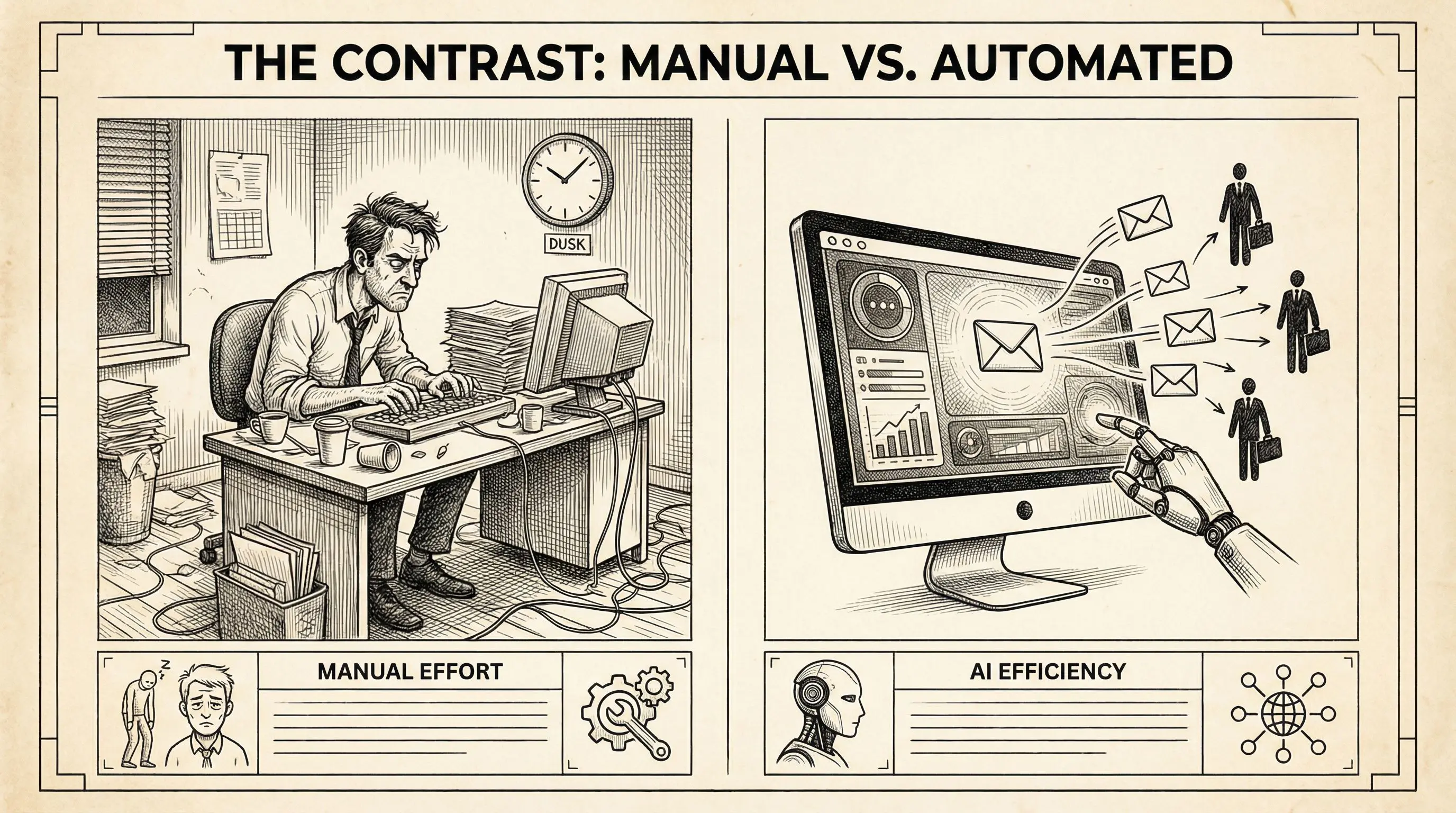
Competitors use AI to time, personalize, and scale follow-ups. The result: faster cycles, lower CAC, and more revenue. Here is how to catch up fast and measure ROI confidently.
What You Are Up Against
Manual follow-ups are slow, inconsistent, and easy to forget. Your competitors are quietly using AI to trigger perfectly timed, multi-channel nudges that feel personal at scale. Reply rates rise 30-50% and deals move faster because no signal gets missed. That is the new baseline.
AI follow-ups are not a fad - they are table stakes.
The Play That Works
AI analyzes engagement patterns like opens, clicks, page visits, and meeting notes to trigger the next-best touch automatically across email, SMS, and social. This increases reply rates by 30-50% compared to manual follow-ups, largely due to timing precision and personalization (Kixie, 2025 - https://www.kixie.com/sales-blog/sales-automation-statistics-you-need-to-know-in-2025/). With 88% of marketers now using AI daily for content and outreach, the speed gap is widening for teams that wait (SurveyMonkey, 2025 - https://www.surveymonkey.com/mp/ai-marketing-statistics/).
Automated sequences outperform one-off blasts, driving 3-4x higher conversions and lifting opens from 25% to 42% by reacting to actual behavior, like a demo attendance or pricing page visit (InBeat, 2025 - https://inbeat.agency/blog/marketing-automation-statistics). AI also scores intent and prioritizes reps toward the highest-probability accounts, cutting customer acquisition costs by 30-37% and shortening sales cycles by 28% (Cubeo, 2025 - https://www.cubeo.ai/25-ai-marketing-statistics-every-cmo-should-know-in-2025/).
The outcome is more pipeline and faster revenue without adding headcount. That is why AI-driven follow-ups are quietly becoming the standard operating model for growth teams.
Proving the Payoff
Start with a controlled test. Split your inbound or event leads into two cohorts: AI-sequenced vs. manual follow-up. Keep offers, channels, and SLAs consistent, then compare reply rate, qualified rate, and time-to-opportunity. Expect higher replies and 3-4x conversion lifts in the AI arm, plus a noticeable drop in no-shows as reminders and content nudges stay on tempo (InBeat, 2025).
Layer in cost and speed. Track sales cycle length and acquisition cost by cohort. Teams using AI routinely see 30-37% lower CAC and 28% faster closes because reps spend time on high-intent prospects instead of chasing cold threads (Cubeo, 2025). For a broader lens, model 12-week pipeline impact: more qualified leads, higher meeting hold rates, and improved win rates. Remember that automation returns compound - marketing automation averages a 544% ROI over three years by scaling nurturing and follow-up economics (InBeat, 2025). Tie those gains to revenue per rep and you have a business case the CFO will love.
Under the Hood
AI ingests signals from your CRM, website, ads, and email tools, then scores intent and recommends the next action. It drafts messages tailored to persona and stage, chooses timing, and pushes across channels automatically. As prospects engage, the system learns and adapts. The result is 1-to-1-feeling communication at scale, with 77% of marketers already using AI for personalization and 92% of businesses personalizing campaigns this way (InBeat, 2025; Litslink, 2025 - https://litslink.com/blog/ai-marketing-statistics).
Upsides vs Tradeoffs
| Aspect | What You Gain | Considerations | Exec Tip |
|---|---|---|---|
| Reply and conversion lift | 30-50% more replies and up to 3-4x conversions | Requires clean data and mapped journeys | Start with top three journeys where intent is strongest |
| CAC efficiency | 30-37% lower acquisition costs via prioritization | Mis-scoring risks starving segments | Review score models monthly with sales feedback |
| Sales velocity | 28% faster cycles with next-best actions | Reps need adoption and trust | Pair AI tasks with clear rep workflows |
| Personalization at scale | 1-to-1 feel across channels | Over-automation can feel robotic | Keep human-in-the-loop on key steps |
| Pipeline quality | Up to 451% more qualified leads from nurturing | Content gaps limit performance | Build a lightweight content matrix by funnel stage |
| ROI over time | Automation averages 544% ROI | Early setup takes time | Pilot in 30 days, scale in 90 |
Teams that win treat AI follow-ups as a revenue system, not a tool. They connect web behavior, content engagement, and CRM stages to trigger human-feeling touches at the exact right moment. That is why AI now underpins the majority of modern marketing - and why manual-only follow-up is yesterday’s playbook.
Questions Executives Ask
How fast can we see impact? Most teams see a reply-rate lift within two weeks and measurable pipeline gains in one quarter as sequences stabilize and scoring learns. What about brand voice and compliance? Use approved tone templates and legal blocks in your AI library so messages stay consistent while still personal. Will reps be replaced? No - AI removes the repetitive work so reps focus on discovery, relevance, and closing. How do we avoid spammy sequences? Anchor triggers to real intent signals like pricing page visits or post-demo inactivity and cap frequency by stage. What integrations are required? Start by connecting CRM, marketing automation, and website analytics so the AI can see behavior and write context-aware follow-ups.
Where To Go From Here
If you want the lift without the guesswork, book a Volume 11 demo. We will map your top journeys, plug in your data sources, and launch high-performing AI follow-ups in weeks. You will see the impact in replies, velocity, and CAC - fast. Let us show you the system your competitors are already using.